
Root Canal Treatment in Krishna Nagar
Gentle Root Canal Treatment in Krishna Nagar
A badly decayed or infected tooth does not always have to be removed. Root canal treatment removes infected tissue, helps relieve tooth pain and can help preserve your natural tooth, carried out gently by an experienced dentist trusted across East Delhi.
What Is Root Canal Treatment?
Remove the infection, not the tooth
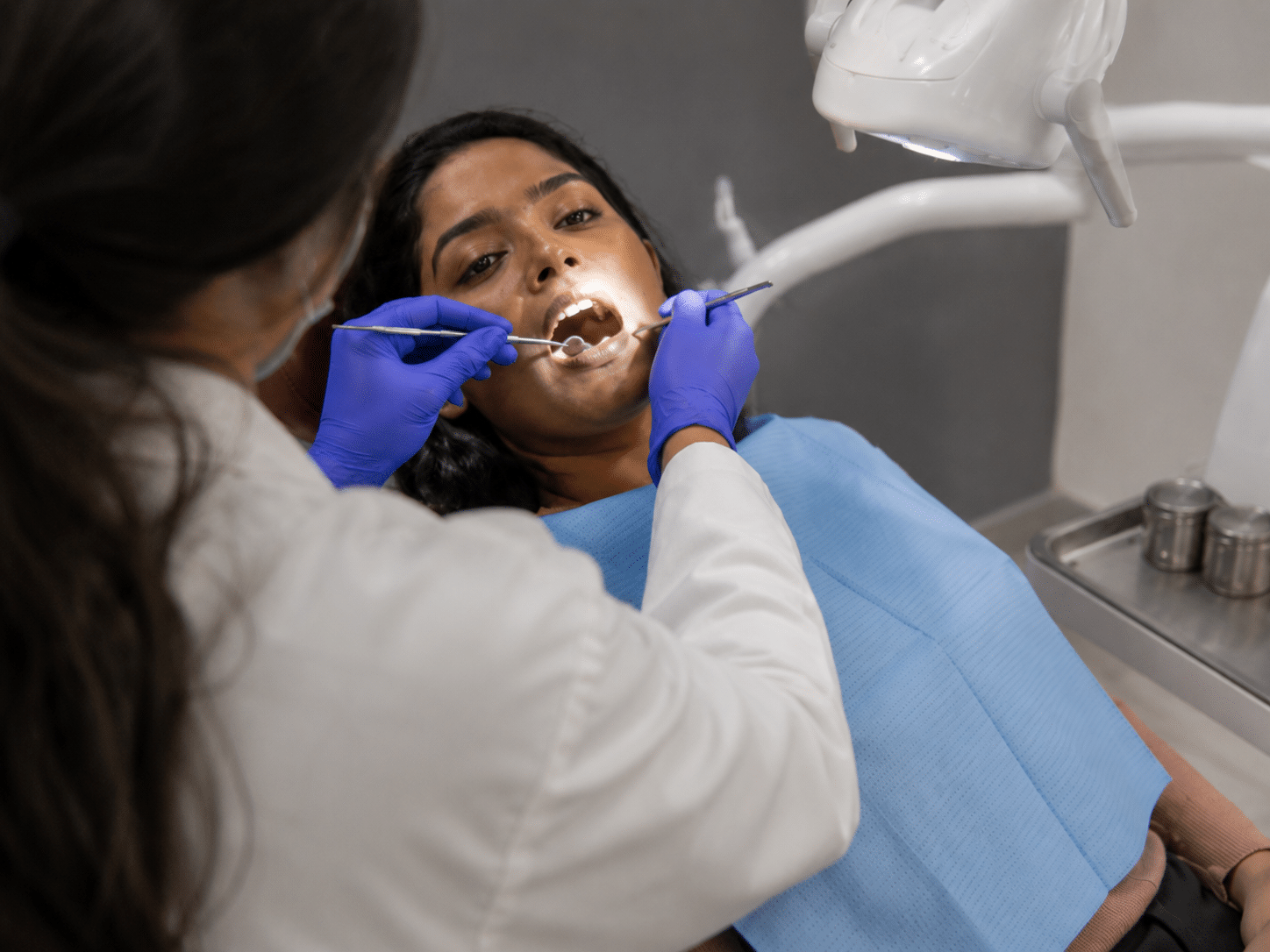
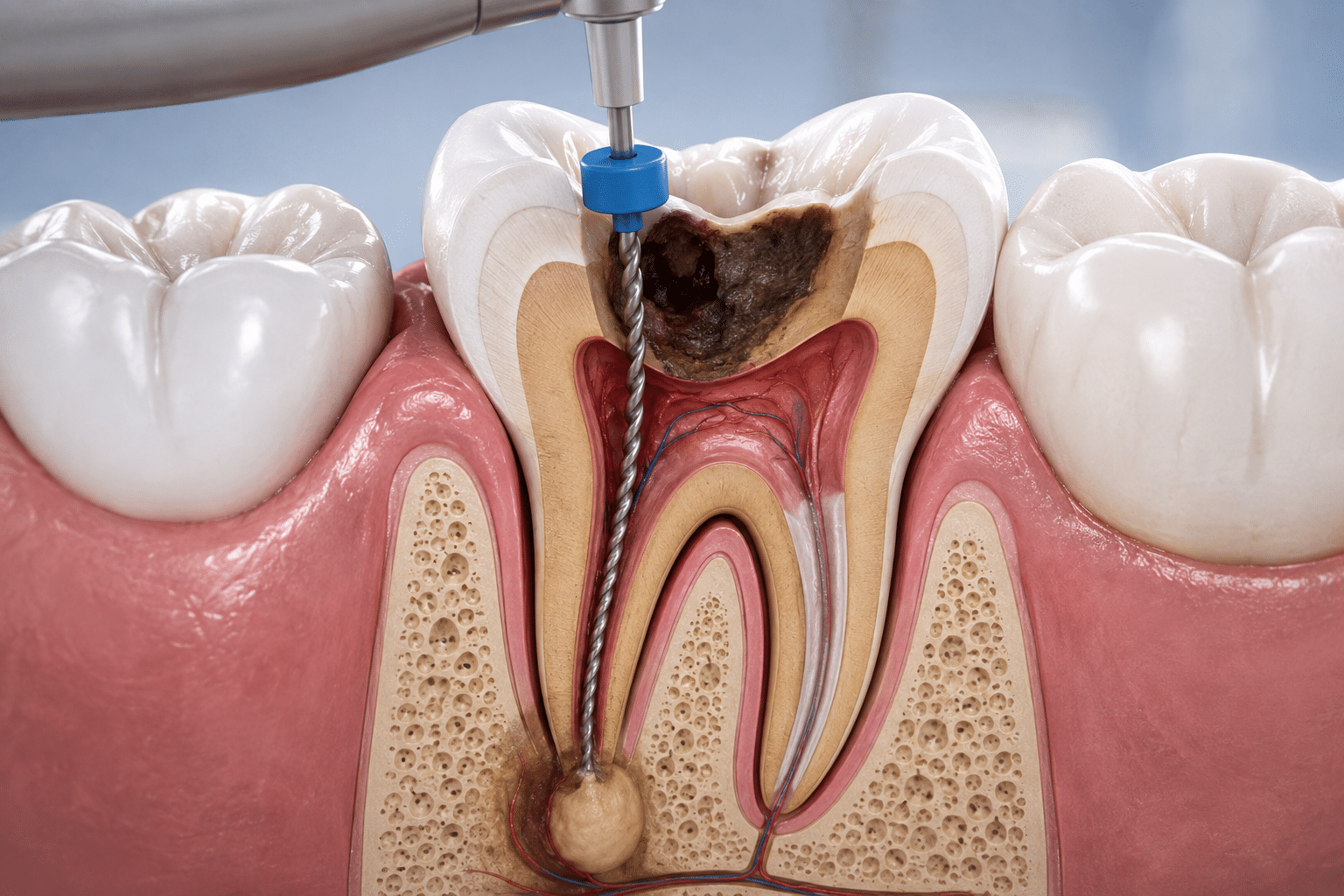
Root canal treatment, also called RCT or endodontic treatment, is needed when decay or injury reaches the pulp, the innermost layer of the tooth that holds the nerve and blood supply. Once the pulp is infected, the pain will not settle on its own. An RCT removes the infected pulp, disinfects the canals inside the roots and seals them, so the natural tooth stays in place and works normally again.
Despite its reputation, the purpose of the procedure is to end a toothache, not to cause one. With local anaesthesia and modern rotary instruments, most patients say a root canal felt no worse than a deep filling.
Remove the infection
Infected pulp and decayed tooth material are cleared out completely.
Clean, shape and seal
The canals are disinfected and filled with an inert sealing material.
Protect with a cap
A crown restores strength so you can chew on that side again.
Common Causes
Why the pulp inside a tooth gets infected
A root canal becomes necessary when bacteria reach the nerve inside the tooth. These are the situations that most often lead there.
Deep, untreated decay
A cavity left too long passes through enamel and dentine and reaches the pulp.
Cracked or fractured tooth
Even a fine crack lets bacteria travel straight down to the nerve.
Injury or trauma
A knock to the tooth can damage the pulp without any visible break.
Old or leaking fillings
A worn filling or loose cap allows bacteria back in underneath it.
Repeated dental work
A tooth treated several times over the years can become inflamed.
Grinding and heavy wear
Long-term grinding can wear a tooth down close to the pulp chamber.
If any of these sound familiar, a short examination and X-ray will confirm whether the pulp is involved.
- Sharp or throbbing toothache, often worse at night or while chewing.
- Sensitivity to hot or cold that lingers long after the drink is finished.
- Swelling, tenderness or a small boil on the gum near the tooth.
- A tooth that has darkened or discoloured on its own.
- A deep cavity, broken filling or chipped tooth that has started to hurt.
How Your Root Canal Treatment Is Planned
Root canal treatment is carried out step by step so the infection can be controlled properly before the tooth is permanently sealed and protected.
Control pain and infection first
The tooth is examined and numbed, then infected tissue is removed and the canals are cleaned. Medication may be placed inside the tooth before the next visit.
Allow the tooth to settle
A temporary seal protects the tooth between appointments. This gives the dentist time to check that tenderness, swelling or active infection has reduced before final sealing.
Seal and protect the tooth
Once the canals are ready, they are filled and sealed. The tooth is then assessed for a crown or other final restoration to restore strength for everyday chewing.
Simple, comfortable and transparent
Every step is handled by an experienced dentist, so you know exactly what is happening from the first X-ray through to your final cap.
X-ray & anaesthesia
The tooth is examined & X-rayed, then completely numbed before anything begins.
Access opening
A small opening is made in the tooth to reach the pulp chamber inside.
Cleaning & shaping
Infected pulp is removed and the canals are cleaned, shaped and disinfected.
Filling & sealing
The canals are sealed with an inert material and the opening is closed.
Cap & follow-up
A crown is fitted to protect the tooth and restore full chewing strength.
Root Canal vs Extraction
Why saving the tooth is usually the better choice
Taking the tooth out may sound simpler, but the gap rarely stays harmless. Neighbouring teeth drift, the bite changes and a replacement is eventually needed anyway.
Treatment Planning
An examination and X-ray help confirm the extent of infection, the condition of the roots and the restoration the tooth may need after RCT. Your treatment plan is explained before the first visit.
10+ years of experience
Experienced root canal care in Krishna Nagar
The long-term success of an RCT depends on how carefully the canals are cleaned and sealed. Families across East Delhi trust Dr. Mani for unhurried, gentle and honest treatment.
Experienced lady dentist
Advanced cosmetic training
1,500+ patients treated
Open 7 days a week
Trusted local clinic
Patient reviews
What Our Patients Say
EXCELLENTTrustindex verifies that the original source of the review is Google. I showed my kid teeth to Dr. Mani. Have shown him to many doctors before , but all gave medicine only. Mam explained everything n handled it very well. My kid got RCt n many fillings and all painless. Very satisfied. She is perfect kids dentist.Posted on GoogleTrustindex verifies that the original source of the review is Google. Loved the way she explained the problem so patiently and point to point so that I know what is actually happening in my teeth and provides complete details about what she will do and what will be the result. Clinic is well maintained even for a child patient. Will suggest her always.Posted on GoogleTrustindex verifies that the original source of the review is Google. Dr mani is best dentist. Bohot ache se RCT ke bare mein bataya. Mere bohot teeth kharab hai, sabka pura process bataya. Tooth Filling bohot theek se ki. Very much satisfied. Recommend in east delhiPosted on GoogleTrustindex verifies that the original source of the review is Google. I came here for teeth cleaning, and it was the best experience I've had with a dentist. She was incredibly kind, patient, and explained everything in detail, making it easy for me to understand the treatment and recommendations. I’ll definitely be coming back for my dental filling as well. Her professionalism and caring nature made me feel comfortable throughout the visit. Highly recommended!Posted on GoogleTrustindex verifies that the original source of the review is Google. I have come here for my treatment for the second time and my experience has been very goodPosted on GoogleTrustindex verifies that the original source of the review is Google. It was an amazing experience. Tooth cleaning process was very smooth and very well explained. RecommendedPosted on GoogleTrustindex verifies that the original source of the review is Google. We had an amazing experience visiting this clinic for my 8-year-old daughter. Going to the dentist can be scary for kids, but the staff and Dr.Mani Maheshwari made it incredibly smooth and fun. They are true kid specialists! She took the time to explain everything patiently and made sure my daughter felt safe and comfortable. The environment is warm, energetic, and perfectly catered to children. We left with a big smile and no dental anxiety. Thank you so much! Highly recommend for kidsPosted on GoogleTrustindex verifies that the original source of the review is Google. Dr Mani mam did my RCT . Tooth was badly broken but I am thankful with the result. Best in easy delhi. Best equipments, good staff.Posted on GoogleTrustindex verifies that the original source of the review is Google. Our first sitting with mam best experience, she was given me a best suggestion regarding my teeth..Posted on GoogleTrustindex verifies that the original source of the review is Google. Came with painful condition to Dr Mani, she is very helpful. Did painless extraction of My father's wisdom tooth. Surgery was properly done. Happy with service. Clinic is clean, nice n with latest technology.
Patient Questions
Clear answers before your visit
What is the RCT full form?
Is root canal treatment painful?
Root canal treatment is usually not painful during the procedure because the dentist uses local anaesthetic to numb the tooth and surrounding area. Most patients remain comfortable while the infected or inflamed pulp is removed.
How many days or sittings does a root canal take?
Do I need a cap after root canal treatment?
A crown is often recommended after root canal treatment, particularly for teeth that need additional protection from fracture. Your dentist will assess the tooth and recommend the most suitable restoration.
Is RCT permanent?
Why is RCT completed over multiple visits?
What happens if I delay the root canal?
How do I book an appointment?
Call +91 98399 88617 or use the consultation form below. The clinic is open 7 days a week from 9:00 AM to 9:00 PM, and pain cases are given priority.
Book appointment
Book Your Appointment at Our Krishna Nagar Clinic
Visit Our Clinic
D-11, Krishna Nagar Main Road, Near Rattan Devi School, Delhi 110051
Call Us
+91 98399 88617
Clinic Hours
Open 7 days, 9:00 AM to 9:00 PM