
Filling and Restoration in Krishna Nagar
Tooth Filling in Krishna Nagar
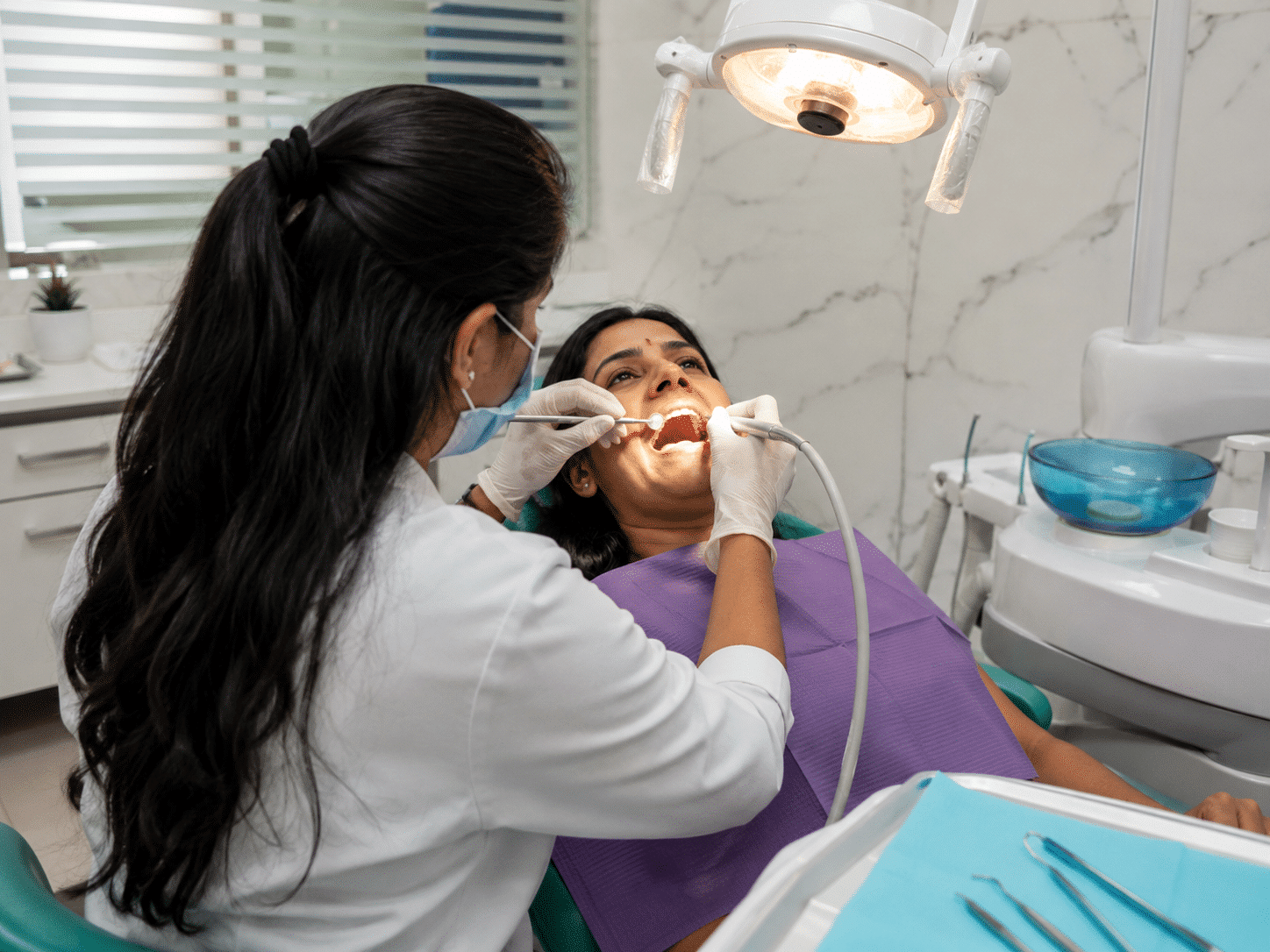
A cavity does not repair itself. Once decay has broken through the enamel, it keeps going deeper, and the only way to stop it is to have an experienced dentist clean it out and seal the tooth. Most fillings are done in a single sitting, in tooth coloured material that is difficult to tell apart from the tooth around it.
Cavity Treatment Explained
What a dental filling does
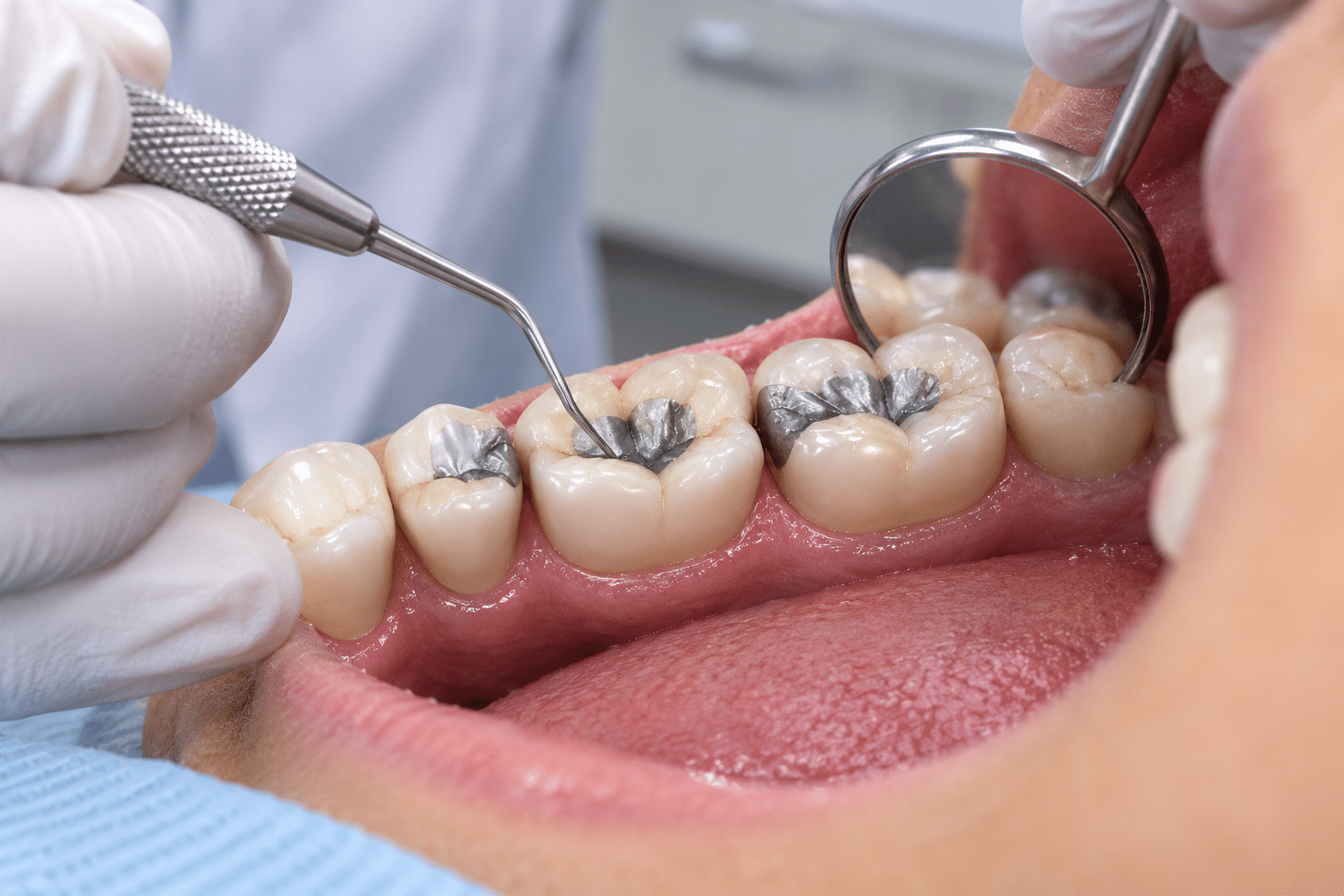
A tooth filling repairs a tooth that has been damaged by decay, a crack or a chipped edge. The softened, decayed part is cleaned away, and the space left behind is rebuilt with a material that bonds to the remaining tooth. That seal keeps bacteria out, ends the sensitivity and returns the tooth to its normal shape for chewing.
Restoration is the wider term for the same purpose. A small cavity needs a simple filling, a larger one may need an inlay or onlay made in a laboratory, and a badly broken tooth may need a crown to hold it together. Which of these your tooth needs depends on how much sound tooth structure is still standing.
Remove only what is damaged
Sound enamel and dentine are left alone, since none of it grows back.
Seal the tooth completely
A tooth filling only works if the margins are sealed, otherwise, decay continues underneath it.
Restore the bite
The tooth filling is shaped and adjusted so the tooth meets its opposite number correctly.
Types of Fillings
Tooth Fillings and restorations we offer
Which material suits your tooth depends on the size of the cavity, where the tooth sits in the mouth and how much chewing force it takes.
Tooth coloured composite fillings
Shade matched composite bonded directly to the tooth and hardened in the chair. Suitable for most cavities and invisible once polished.
Glass ionomer fillings
GIC releases fluoride into the tooth around it, which makes it useful for children's teeth and for cavities at the gum line.
Ceramic inlays and onlays
Laboratory made restorations for cavities too large for a direct filling but not extensive enough to need a full crown.
Deep cavity fillings
Where decay has reached close to the nerve, a protective base is placed under the filling to settle the tooth and avoid a root canal where possible.
Front tooth fillings
Chipped corners and cavities between the front teeth rebuilt in composite, layered and shaped to match the natural tooth.
Replacing old fillings
Worn, stained, cracked or leaking fillings removed and replaced, with any decay that has formed underneath cleaned out first.
Early decay usually causes nothing at all, which is why it is often found at a routine check rather than by the patient. By the time it can be felt, it has usually gone some way in.
- Sensitivity to cold, hot or sweet food that lingers after the mouthful.
- A visible hole, dark spot or grey patch on the tooth surface.
- Food packing into the same spot between two teeth every time you eat.
- A rough or sharp edge your tongue keeps finding.
- An old filling that has cracked, chipped or fallen out.
- A dull ache in one tooth when you bite down on it.
Why Timing Matters
What untreated tooth decay leads to
Decay moves at its own pace and does not reverse. What changes with time is not whether the tooth needs treatment, but how much treatment it ends up needing.
It reaches the nerve
Enamel decay causes no pain. Once it passes into the dentine and reaches the pulp, the tooth starts to ache on its own, and a filling is no longer enough to save it.
A filling becomes a root canal
A cavity that could have been sealed in one appointment turns into root canal treatment followed by a crown, which means more visits and more of the tooth gone.
The tooth can be lost
Infection that spreads out of the root tip causes swelling and abscess, and a tooth broken down that far often cannot be kept at all.
How a tooth filling is done, step by step
A straightforward filling takes well under an hour from start to finish. Here is what happens in that time.
Examination & X-ray
The tooth is examined and X-rayed where needed, so the depth of the cavity is known before treatment begins.
Numbing the tooth
Local anaesthetic is given for anything beyond a very shallow cavity, so the procedure itself is not felt.
Cleaning out the decay
Only the softened, decayed tooth is removed, and the cavity is cleaned and prepared for bonding.
Placing the filling
Composite is built up in layers and hardened with a curing light, or the impression is taken if an inlay is being made.
Shaping, bite check and polish
The filling is contoured, your bite is checked and adjusted, and the surface is polished smooth.
Now or Later
What a delayed cavity costs you in treatment
Most people come in when the tooth starts to ache. This is what separates a cavity treated at the point it is found from the same cavity treated a year or two later.
A check and an X-ray show how deep the cavity has gone and whether a filling is still enough. Small cavities are quick, comfortable and inexpensive to treat compared with what they become.
10+ years of experience
Experienced dentist for tooth fillings in Krishna Nagar
A filling is a small procedure that is easy to do adequately and harder to do well. Contact points, margins and bite adjustment are what decide whether it lasts a decade or fails in two years. Patients across Krishna Nagar and East Delhi come to the clinic for careful, unhurried restorative work.
Conservative cavity preparation
Tooth coloured by default
Nerve preserved where possible
1,500+ patients treated
Open 7 days a week
Patient reviews
What Our Patients Say
EXCELLENTTrustindex verifies that the original source of the review is Google. I showed my kid teeth to Dr. Mani. Have shown him to many doctors before , but all gave medicine only. Mam explained everything n handled it very well. My kid got RCt n many fillings and all painless. Very satisfied. She is perfect kids dentist.Posted on GoogleTrustindex verifies that the original source of the review is Google. Loved the way she explained the problem so patiently and point to point so that I know what is actually happening in my teeth and provides complete details about what she will do and what will be the result. Clinic is well maintained even for a child patient. Will suggest her always.Posted on GoogleTrustindex verifies that the original source of the review is Google. Dr mani is best dentist. Bohot ache se RCT ke bare mein bataya. Mere bohot teeth kharab hai, sabka pura process bataya. Tooth Filling bohot theek se ki. Very much satisfied. Recommend in east delhiPosted on GoogleTrustindex verifies that the original source of the review is Google. I came here for teeth cleaning, and it was the best experience I've had with a dentist. She was incredibly kind, patient, and explained everything in detail, making it easy for me to understand the treatment and recommendations. I’ll definitely be coming back for my dental filling as well. Her professionalism and caring nature made me feel comfortable throughout the visit. Highly recommended!Posted on GoogleTrustindex verifies that the original source of the review is Google. I have come here for my treatment for the second time and my experience has been very goodPosted on GoogleTrustindex verifies that the original source of the review is Google. It was an amazing experience. Tooth cleaning process was very smooth and very well explained. RecommendedPosted on GoogleTrustindex verifies that the original source of the review is Google. We had an amazing experience visiting this clinic for my 8-year-old daughter. Going to the dentist can be scary for kids, but the staff and Dr.Mani Maheshwari made it incredibly smooth and fun. They are true kid specialists! She took the time to explain everything patiently and made sure my daughter felt safe and comfortable. The environment is warm, energetic, and perfectly catered to children. We left with a big smile and no dental anxiety. Thank you so much! Highly recommend for kidsPosted on GoogleTrustindex verifies that the original source of the review is Google. Dr Mani mam did my RCT . Tooth was badly broken but I am thankful with the result. Best in easy delhi. Best equipments, good staff.Posted on GoogleTrustindex verifies that the original source of the review is Google. Our first sitting with mam best experience, she was given me a best suggestion regarding my teeth..Posted on GoogleTrustindex verifies that the original source of the review is Google. Came with painful condition to Dr Mani, she is very helpful. Did painless extraction of My father's wisdom tooth. Surgery was properly done. Happy with service. Clinic is clean, nice n with latest technology.
Patient Questions
Clear answers before your visit
What is a dental filling?
Which filling material is best?
Does getting a filling hurt?
How long does a filling take?
Is a tooth filling permanent?
Do all cavities need to be filled?
Can a deep cavity be filled, or does it need a root canal?
What should I avoid after a filling?
Book appointment
Book Your Appointment at Our Krishna Nagar Clinic
Visit Our Clinic
D-11, Krishna Nagar Main Road, Near Rattan Devi School, Delhi 110051
Call Us
+91 98399 88617
Clinic Hours
Open 7 days, 9:00 AM to 9:00 PM