
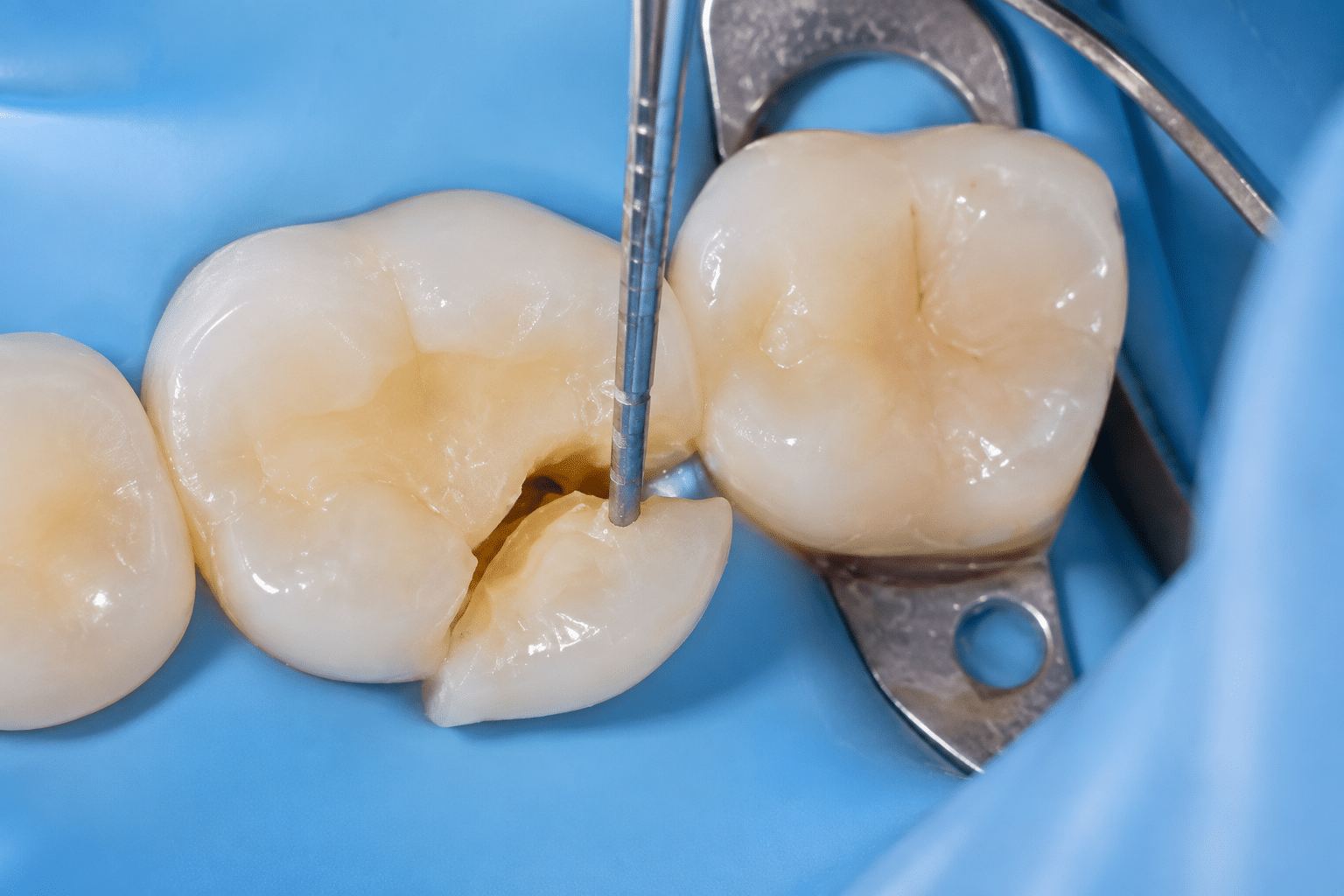
Composite resin bonded into a chip or crack and shaped to match the tooth, usually completed in a single visit.
Tooth Fracture Treatment in Krishna Nagar
Fracture Tooth Treatment in Krishna Nagar
A cracked tooth does not heal. The crack stays where it is and widens under normal chewing, so the sooner an experienced dentist seals it the more of the tooth can be saved. We treat chipped, cracked and broken teeth seven days a week, from 9 AM to 9 PM.
Open 7 Dayssame day appointments for broken teeth
10+Years of clinical experience
1,500+Patients treated
BDS, FAAD, DSDAdvanced clinical training
7 DaysOpen 9 AM to 9 PM
Same DayUrgent appointments for fractured teeth
Front teeth and lower molarsThe two places cracks happen most
Cracked Tooth Explained
What a tooth fracture is
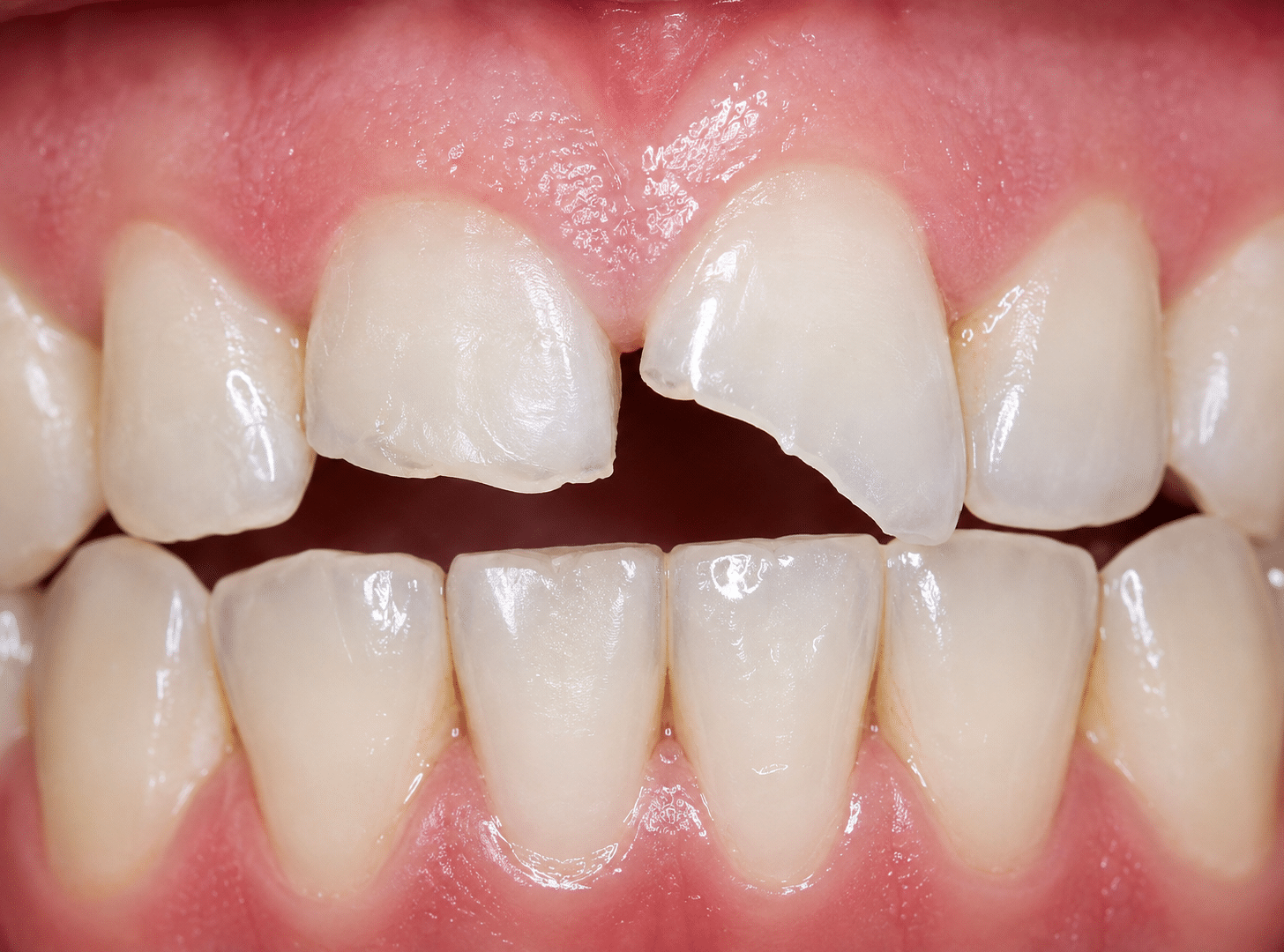
A tooth fracture is a crack or break in the tooth, ranging from a hairline mark in the enamel to a tooth split into two pieces. It is also called a cracked tooth or cracked tooth syndrome. Cracks occur most often in the upper front teeth and the lower back molars, and they are more common in children and in adults over fifty.
Unlike a cut or a broken bone, a cracked tooth cannot repair itself. Enamel has no blood supply and no way to knit back together, so a crack only ever stays the same or gets worse. What treatment can do is seal it, cover it and stop the bacteria that would otherwise reach the pulp inside.
01
Not every crack needs treatingHairline craze lines in the enamel are harmless and are simply monitored.
02
Depth decides everythingHow far the crack has travelled towards the pulp determines whether a filling, a crown or a root canal is needed.
03
Time mattersA crack sealed early usually saves the tooth. The same crack left for months often ends in extraction.
Fractured Tooth Treatments
Fractured tooth treatments we offer
Which of these your tooth needs depends on where the crack sits and how deep it has gone, both of which are checked before anything is decided.
A rough or sharp broken edge smoothed, adjusted where it hits too hard on biting, and polished.
A ceramic cap fitted over a badly broken tooth, holding the remaining structure together and taking the chewing load.
A thin shell across the front surface where most of the natural tooth is intact but the edge is chipped or worn.
Needed when the crack has reached the pulp and bacteria have infected it, which saves a tooth that would otherwise be lost.
When the root is split beyond saving, the tooth is removed and replaced with an implant or bridge.
Do You Have a Cracked Tooth?
Signs of a fractured tooth
Cracks often cause nothing at all, and many are found at a routine check. When symptoms do appear, these are the usual ones.
A sharp pain when you bite down that disappears the moment you release.
Sensitivity to hot, cold or sweet food in one particular tooth.
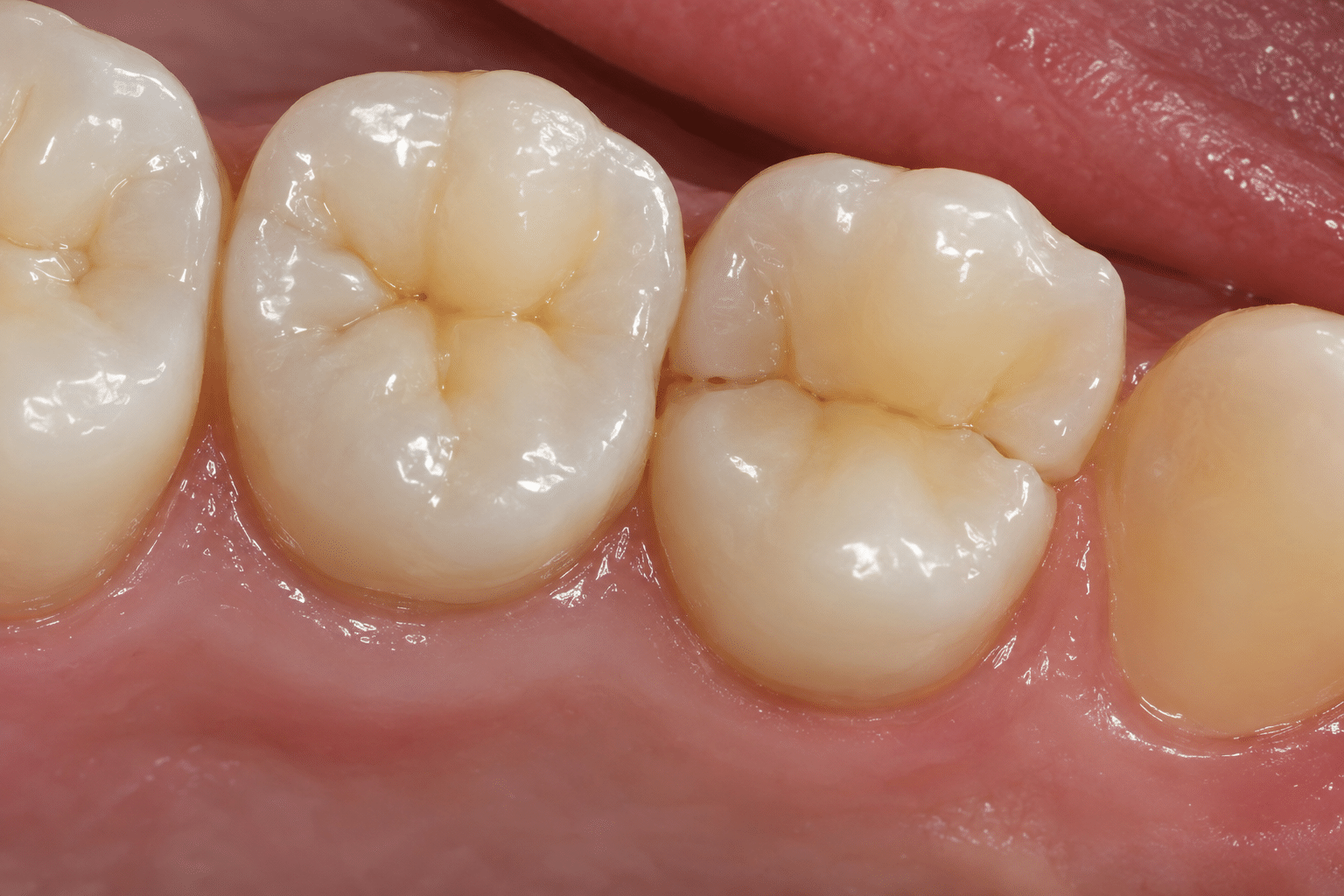
A visible chip, line or missing piece in the tooth.
Pain that comes and goes rather than staying constant, so it is easy to dismiss.
Swelling in the gum around a single tooth.
A tooth that broke after an injury, a fall or a knock while playing sport.
Seen the same day where possibleWe are open seven days a week, so a broken tooth does not have to wait for the weekend to pass.
How Deep the Crack Goes
How the depth of a crack decides the treatment
Every fractured tooth falls into one of three groups, and the group it falls into is what decides whether the treatment takes twenty minutes or several visits.
Cracks in the enamel only
Craze lines and small chips that have not passed the outer layer. These cause no pain, need nothing more than smoothing or bonding, and are often left alone entirely.
Cracks into the dentine
Once past the enamel the tooth becomes sensitive and painful on biting. Treatment at this stage means bonding or a crown, and the tooth is usually saved without touching the nerve.
Cracks reaching the pulp or root
Bacteria reach the nerve and infection follows, so root canal treatment is needed to keep the tooth. A crack that splits the root below the gum line usually cannot be saved.
Treatment Procedure
How a fractured tooth is treated, step by step
Finding the crack is often the harder part, since many are invisible on an X-ray. Here is how the tooth is assessed and treated.
1
Examination and bite testYou bite on a small instrument to locate which tooth and which part of it hurts, and the tooth is checked for visible cracks and damaged fillings.
2
X-ray and crack detectionAn X-ray shows damage below the gum and around the root. A bright light passed through the tooth or a staining dye reveals fine cracks the X-ray misses.
3
Explaining the optionsYou are told how deep the crack has gone, whether the tooth can be saved and which treatment it needs, before anything is started.
4
Treating the toothBonding and reshaping are completed in the chair. A crown is prepared and fitted over two visits, and a root canal is done first where the pulp is involved.
5
Bite adjustment and reviewThe bite is adjusted so the repaired tooth is not taking more force than the ones around it, and you return for a review.
Treated Early or Left
A crack treated early compared with one left alone
Cracks are easy to ignore because the pain comes and goes. This is what separates a tooth seen at the first sharp twinge from the same tooth seen months later.
Book an Urgent AppointmentWhat matters
Treated early
Left untreated
Chance of saving the tooth
High
Falls sharply
Treatment needed
Bonding or a crown
Root canal or extraction
The nerve
Usually untouched
Often infected
Pain
Settles quickly
Becomes constant
Risk of the tooth splitting
Low once covered
Rises with every bite
What follows
A review visit
An implant or bridge
Do Not Wait It Out
A cracked tooth will not heal on its own
Pain that comes and goes is not a sign the tooth is recovering. It means the crack is still there and still moving. An examination shows how deep it has gone and whether the tooth can still be saved with a simple repair.
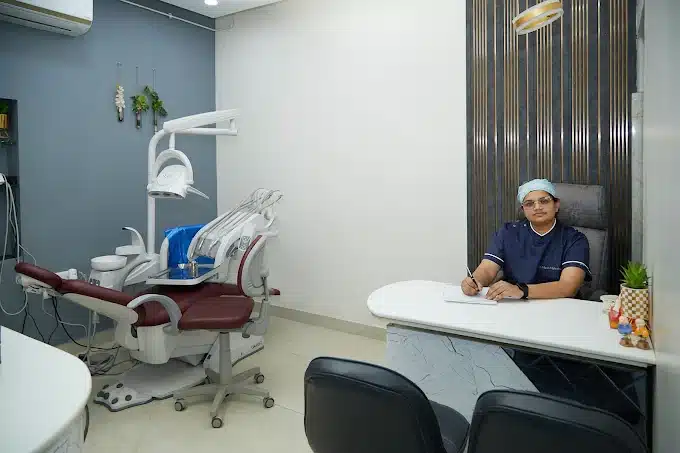
Dr. Mani MaheshwariBDS, FAAD, DSD
10+ years of experience
10+ years of experience
Why Patients Choose Our Clinic
Experienced dentist for broken teeth in Krishna Nagar
A broken tooth rarely happens at a convenient hour. Being open seven days a week from 9 AM to 9 PM means patients across Krishna Nagar and East Delhi can be seen quickly, which is what decides how much of the tooth is still there to save.
01
Open seven days a weekAppointments from 9:00 AM to 9:00 PM, so a fractured tooth is seen quickly rather than left over a weekend.
02
The tooth is saved where it can beExtraction is a last resort, considered only when the root is split beyond repair.
03
Cracks located properlyBite tests, transillumination and X-rays are used, since many cracks do not show on an X-ray alone.
04
1,500+ patients treatedOver a decade of restorative dental experience.
05
Options explained before treatmentYou are told what the tooth needs and why before any work is started.
Patient Reviews
What patients say
Patients consistently rate the clinic Excellent on Google, and reviews most often mention how natural the results look and how clearly the plan was explained.
Frequently Asked Questions
Common questions about cracked and broken teeth
What patients ask most often about saving a cracked tooth, treatment time, pain and what to do before reaching the clinic.
Ask the DentistCan a cracked tooth heal on its own?
No. A tooth cannot repair a crack the way skin or bone heals, because enamel has no blood supply. Treatment can seal and cover the crack so it stops progressing, which is why having it seen early matters.
Is a fractured tooth a dental emergency?
A badly broken or painful tooth should be seen as soon as possible, particularly if there is swelling, fever or constant pain, since these point to infection. A small chip with no pain is not urgent, but still needs checking.
Can a cracked tooth be saved?
In most cases yes. Cracks confined to the enamel or dentine are usually repaired with bonding or a crown. A crack reaching the pulp needs root canal treatment to save the tooth, and only a tooth split below the gum line into the root is normally beyond saving.
Does every crack need treatment?
No. Craze lines are fine hairline cracks in the enamel that cause no pain and need no treatment. They are noted and monitored at check-ups. Anything causing pain, sensitivity or a visible break does need treating.
Why does the pain come and go?
A crack opens slightly when you bite and closes when you release, which is what causes the sharp jab on biting rather than constant ache. The pain disappearing does not mean the crack has closed for good.
How long does treatment take?
Bonding and reshaping are usually done in one appointment of under an hour. A crown takes two visits, and root canal treatment followed by a crown takes longer since it is done in stages.
Will treating a cracked tooth hurt?
Local anaesthetic is used for anything beyond simple polishing, so the treatment itself is not felt. Most patients say the relief from the biting pain afterwards is immediate.
What should I do before I get to the clinic?
Hold a cold pack against the outside of the cheek to limit swelling, rinse with warm salt water to keep the area clean, avoid chewing on that side and take an ordinary over-the-counter painkiller if you need it. If a piece of the tooth has come away, bring it with you.