
Most of us have felt a twinge from a cold drink or a sweet that passes in a second. That kind of sensitivity is common and usually harmless. A toothache that lingers, keeps returning or gets worse over days is different – it can mean the soft tissue inside the tooth, called the pulp, is inflamed or infected.
The pulp contains the tooth’s nerve and blood supply. When deep decay, a crack or an old injury lets bacteria reach it, the pulp swells inside a hard shell with nowhere to expand. That pressure is what causes the deep, throbbing pain many people describe. Knowing the warning signs helps you get the tooth checked while it can still be saved.
Key takeaways
- Pain that lingers after hot or cold, or that wakes you at night, is a common sign of an inflamed nerve.
- Swelling, a pimple on the gum or a bad taste can mean infection has spread beyond the root.
- Some infected teeth cause little or no pain, so an X-ray is the only way to be sure.
- Treated early, most infected teeth can be saved with root canal treatment.
What the tooth nerve does
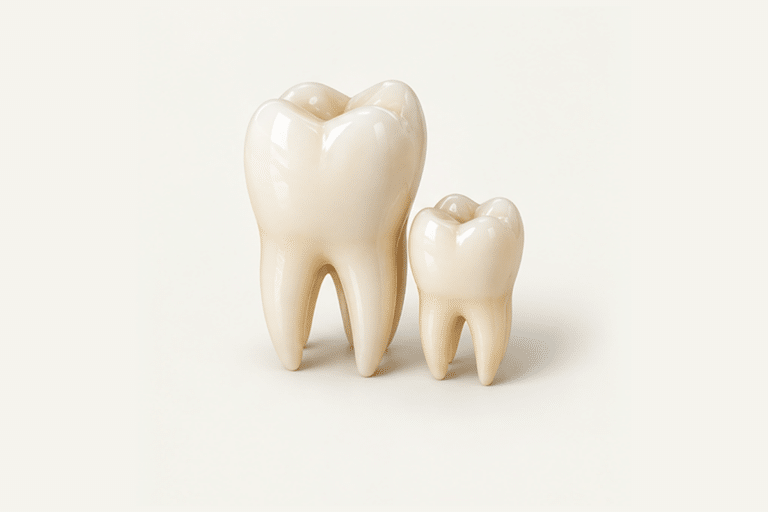
Each tooth has a hard outer layer of enamel, a softer layer of dentine underneath and, at the centre, the pulp. The pulp runs from the crown of the tooth down through narrow canals inside each root. It helped the tooth grow, and in an adult tooth it mainly acts as a warning system, reacting to temperature, pressure and damage.
Because the pulp sits inside a rigid shell, inflammation has nowhere to go. In the early stage, called reversible pulpitis, the nerve is irritated but can recover once the cause – usually a cavity – is treated. If bacteria keep spreading, the pulp can become permanently inflamed (irreversible pulpitis) and eventually die, leaving infection that can spread to the bone around the root tip.
7 warning signs of an infected tooth nerve
These signs don’t always appear together, and their strength varies from person to person. Any one of them is worth having checked.
- Pain that keeps coming back: A tooth that aches on and off for days, or hurts more each time, often points to an inflamed nerve rather than simple sensitivity.
- Sensitivity that lingers: Ordinary sensitivity fades within seconds. An ache that stays for a minute or more after a hot cup of chai or cold water suggests the nerve is affected.
- Pain when you bite or chew: Infection that reaches the tissue around the root tip makes the tooth tender when you bite down or tap it.
- Toothache that wakes you at night: Throbbing pain that starts on its own, especially when lying down, often means pressure is building inside the tooth.
- Swelling or a pimple on the gum: A small bump near the tooth, sometimes with a salty or bad taste, can be an abscess draining from the root.
- A tooth that turns darker: A tooth that becomes grey or darker than its neighbours may have a damaged or dying nerve, sometimes years after a knock.
- Deep decay, a crack or a large old filling: When damage reaches close to the pulp, bacteria can get in even if the pain is mild or comes and goes.
Sensitivity or an infected nerve? How they differ
Many people wonder whether their pain is “just sensitivity”. This comparison shows the typical differences, although only an examination can confirm what is happening.
| Ordinary sensitivity | Possible infected nerve | |
|---|---|---|
| How long pain lasts | A few seconds | A minute or longer, or constant |
| What triggers it | Cold, sweet or sour food | Hot or cold, biting, or no trigger at all |
| Night-time pain | Rare | Common, often throbbing |
| Swelling | No | Sometimes, in the gum or face |
| Usual treatment | Desensitising toothpaste, fluoride, small fillings | Root canal treatment, or extraction if the tooth can’t be saved |
What causes the nerve to become infected
The most common cause is tooth decay that has been left untreated until it reaches the pulp. Other causes include a cracked tooth, a large or leaking filling, repeated dental work on the same tooth, and injury – a fall or a knock to the mouth can damage the nerve even when the tooth looks fine at first.
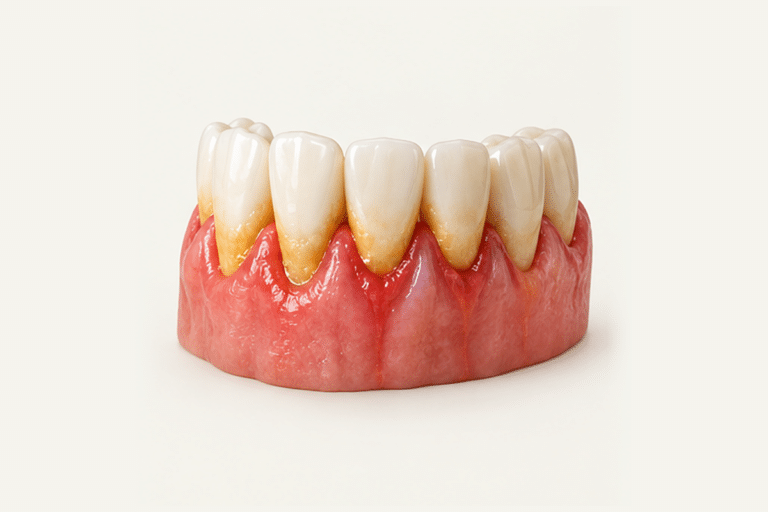
Gum disease can also allow bacteria to reach the root from the side. In children, decay in milk teeth spreads to the pulp quickly because the enamel is thinner, which is why toothache in a child should always be checked promptly.
When to see a dentist
Book a check-up if tooth pain lasts more than two or three days, if sensitivity lingers after hot or cold, or if you notice a bump on the gum. Even if the pain settles, the infection may still be there – a nerve that dies can stop hurting while bacteria keep spreading.
Seek care the same day if you have:
Swelling in your face, cheek or neck, a fever with tooth pain, difficulty swallowing or opening your mouth, or pain that painkillers don’t control. Call our emergency dentist as soon as possible – a spreading dental infection needs prompt treatment.
How an infected nerve is diagnosed
At your appointment, Dr Mani will ask about your symptoms – when the pain started, what triggers it and whether it wakes you at night. She then examines the tooth and gum, checks how the tooth responds to cold and gentle tapping, and takes an X-ray to look at the roots and the bone around them.
The X-ray shows how deep any decay goes and whether infection has spread beyond the root tip. Dr Mani then explains what she has found, whether the tooth can be saved, how many visits treatment will take and what it will cost, before anything is started.
Treatment options
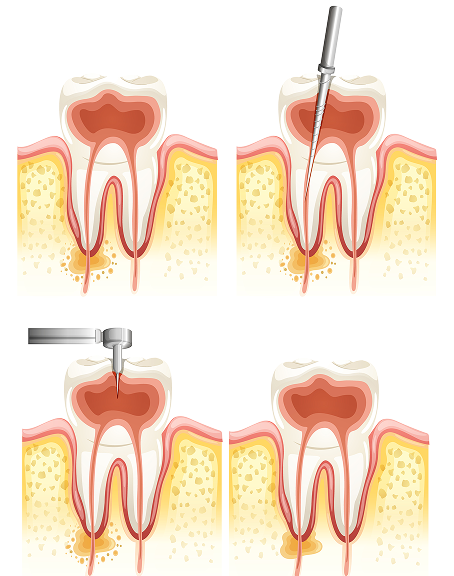
If the nerve is only mildly irritated, removing the decay and placing a filling may be enough for it to settle. When the pulp is permanently inflamed or infected, root canal treatment is the usual way to save the tooth. The infected pulp is removed, the canals are cleaned and shaped, and the tooth is sealed. Most back teeth then need a crown to protect them.
If the tooth is too badly broken to restore, extraction may be the safer option. Dr Mani will explain how the gap could be replaced – with an implant, a bridge or a denture – before you decide. Antibiotics alone cannot cure an infected nerve; they may help control spreading infection, but the source inside the tooth still needs treating.
What happens if you ignore it
An infected nerve does not heal on its own. Over time the infection can form an abscess at the root tip, destroy the surrounding bone and spread into the face or neck. The tooth may also become too damaged to save, which makes treatment more involved and often more expensive. Getting it checked early usually means simpler treatment and a better chance of keeping your natural tooth.
Until you can see the dentist
These steps can make you more comfortable while you wait for your appointment. They do not treat the infection.
Do
- Rinse gently with warm salt water
- Take over-the-counter pain relief as directed on the pack
- Chew on the other side of your mouth
- Keep the area clean with gentle brushing
Don’t
- Put aspirin or clove oil directly on the gum
- Use heat on a swollen face
- Wait for the pain to go away on its own
- Self-prescribe leftover antibiotics
How to protect your teeth
Most nerve infections start with decay, so prevention matters. Brush twice a day with fluoride toothpaste, clean between your teeth daily and cut down on sugary snacks and drinks between meals. Regular check-ups at our dental clinic in Krishna Nagar help catch cavities while they are small and easy to fill. If you grind your teeth or play contact sports, ask about a night guard or mouthguard to protect against cracks and injury.
Frequently asked questions
Can an infected tooth nerve heal on its own?
No. Once the nerve is permanently inflamed or infected, it cannot recover. The pain may stop if the nerve dies, but the infection usually remains and can spread.
Is root canal treatment painful?
The tooth is numbed with local anaesthetic first, so most patients feel pressure rather than pain. Many people find the treatment relieves the pain they had before.
Why has my toothache suddenly stopped?
Sometimes the nerve dies and stops sending pain signals. This doesn’t mean the problem has gone – the tooth still needs to be checked.
Will antibiotics fix an infected tooth?
Antibiotics can help control infection that is spreading, but they can’t reach the source inside the tooth. The tooth still needs treatment.
How long can I wait before seeing a dentist?
Book within a few days for lingering pain. If you have facial swelling, fever or severe pain, seek care the same day.
This article is general information and isn’t a substitute for a dental examination. If you have pain, swelling or a dental injury, please contact a dentist.
Previous article What Happens If You Avoid Root Canal Treatment?