
It surprises many parents to hear that a milk tooth might need root canal treatment. After all, it’s going to fall out anyway. But milk teeth do important jobs until the adult teeth are ready, and losing one too early can cause problems later.
In children, the treatment is usually called pulp therapy. It’s gentle, quick and designed to keep the tooth comfortable until it falls out naturally.
Key takeaways
- Milk teeth hold space for adult teeth and help with chewing and speech.
- Decay spreads quickly in milk teeth because the enamel is thinner.
- Pulpotomy and pulpectomy are the two main types of pulp therapy for children.
- Most treated milk teeth are protected with a small crown.
Why milk teeth are worth saving
Milk teeth guide the adult teeth into place. If one is lost early, the teeth beside it can drift into the gap, leaving too little space for the adult tooth. This can lead to crowding that needs braces later. Milk teeth also help children chew a balanced diet and form sounds clearly when speaking.
Signs your child may need pulp therapy
- Toothache, especially at night: Pain that wakes your child often means decay has reached the nerve.
- Pain when eating: Refusing food or chewing on one side can be a sign.
- Swelling or a pimple on the gum: This suggests an infection near the root.
- A large dark cavity: Deep decay in a back tooth is often close to the nerve.
- A front tooth turning grey after a fall: The nerve may be damaged.
Pulpotomy vs pulpectomy
| Pulpotomy | Pulpectomy | |
|---|---|---|
| What is removed | The infected top part of the pulp | All of the pulp, including in the roots |
| When it’s used | Decay has reached the nerve but roots are healthy | Infection has spread into the roots |
| Visits | Usually one | Usually one |
| Finished with | A crown, usually | A crown, usually |
What happens during treatment
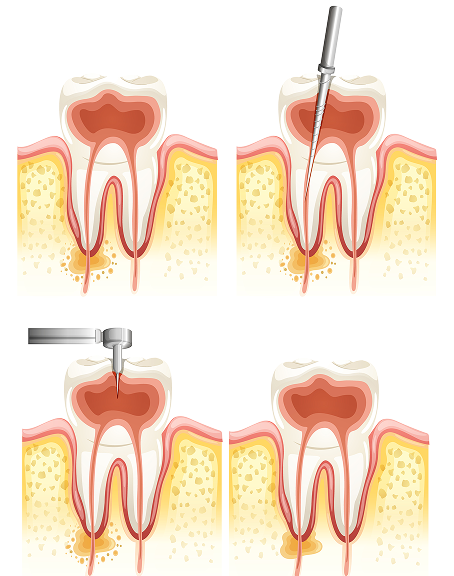
Dr Mani explains each step to you and your child in simple words. The tooth is numbed with a small amount of local anaesthetic, the decay and infected pulp are removed, and the tooth is filled with a safe medicated material. Most children then have a stainless steel or tooth-coloured crown fitted to protect the tooth until it falls out.
We go at your child’s pace, with short breaks if needed. Our children’s dentist service is designed to keep visits calm and positive.
Choosing a crown for your child
Stainless steel crowns are strong, long-lasting and economical, and are commonly used on back milk teeth. Zirconia crowns are white and natural-looking, and are popular for front teeth or visible back teeth. Both fall out with the milk tooth when the adult tooth is ready.
When to get help quickly
Infections in milk teeth can spread to the developing adult tooth underneath, so prompt treatment matters.
Contact the clinic the same day if your child has:
Facial swelling, a fever with toothache, or a knocked-out or broken tooth after a fall. Our emergency dentist sees children urgently during opening hours.
Aftercare at home
Do
- Wait for the numbness to wear off before eating
- Give soft food for the rest of the day
- Help with brushing twice a day
- Book six-monthly check-ups
Don’t
- Let your child chew their numb lip or cheek
- Give sticky toffees that can pull a crown loose
- Skip brushing around the crown
- Ignore returning pain or swelling
Preventing decay in milk teeth
Brush your child’s teeth twice a day with a fluoride toothpaste suitable for their age, and help until they are about seven or eight. Limit sweets, biscuits and sugary drinks between meals, and avoid putting a baby to sleep with a bottle of milk or juice. Regular check-ups at our dental clinic in Krishna Nagar help catch cavities early, when a small filling is enough.
Frequently asked questions
Why treat a milk tooth that will fall out?
Milk teeth hold space for adult teeth. Losing one early can cause crowding and the need for braces later.
Is pulp therapy painful for children?
The tooth is numbed and we work gently, so most children feel little discomfort.
How long does treatment take?
Usually 30 to 60 minutes in a single visit.
Will the crown affect the adult tooth?
No. It falls out with the milk tooth when the adult tooth is ready.
Could my child be sedated?
Most children manage well with local anaesthetic and a calm approach. Dr Mani will discuss options if your child is very anxious.
This article is general information and isn’t a substitute for a dental examination. If you have pain, swelling or a dental injury, please contact a dentist.
Previous article Why Do My Gums Bleed When I Brush?