
Being told you need a root canal can be unsettling. Many people worry about pain, cost or time off work, and it’s tempting to wait and see whether the tooth settles. Sometimes the pain does fade for a while – but that rarely means the problem has gone.
Root canal treatment is recommended when the pulp inside a tooth is permanently inflamed or infected. Understanding what happens if that infection is left helps you make an informed decision with your dentist.
Key takeaways
- An infected tooth nerve cannot heal by itself, even if the pain stops.
- Delaying treatment can lead to an abscess, bone loss and spreading infection.
- The longer you wait, the more likely the tooth will need extraction instead.
- Early treatment is usually simpler, more predictable and less costly.
Why root canal treatment is recommended
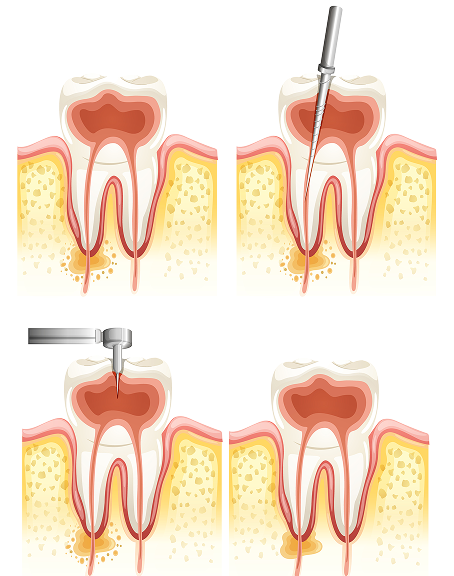
When decay, a crack or an injury allows bacteria into the pulp, the tissue becomes inflamed. Because it sits inside a hard shell, it cannot swell outwards, and the pressure causes pain. Once the inflammation is irreversible, the only ways to remove the source of infection are to clean out the inside of the tooth with root canal treatment or to remove the tooth altogether.
Root canal treatment keeps your natural tooth in place. That matters because natural teeth help keep your bite balanced, stop neighbouring teeth drifting and avoid the cost of replacing a missing tooth.
What happens if you delay treatment
Infection inside a tooth follows a fairly predictable path when it isn’t treated, although the speed varies from person to person.
- The pain may come and go: The nerve may flare up for a few days, then quieten. This can make it feel as though the problem has resolved.
- The nerve can die: When the pulp dies, pain often stops. Bacteria then multiply inside the empty canals.
- An abscess can form: Infection collects at the root tip, causing swelling, tenderness when biting and sometimes a pimple on the gum.
- Bone around the root is lost: Long-standing infection slowly destroys the bone that supports the tooth.
- The tooth weakens and breaks: Decay continues to spread, and a weakened tooth can crack below the gumline, making it impossible to save.
Can the infection spread?
Yes. In some cases a dental infection spreads into the soft tissues of the face and neck. This can cause swelling, fever and difficulty opening the mouth or swallowing. Although serious spread is uncommon, it can become a medical emergency.
Get urgent care if you notice:
Swelling in your face or neck, a fever, difficulty swallowing or breathing, or swelling that is getting worse quickly. Contact our emergency dentist straight away, or go to a hospital emergency department if you have trouble breathing.
Treatment now vs treatment later
This comparison shows how delaying can change what is involved. Every tooth is different, so your dentist will explain your own situation.
| Treated early | Treated later | |
|---|---|---|
| Typical visits | One or two | Often more, sometimes with antibiotics first |
| Chance of saving the tooth | High | Lower if the tooth breaks or bone is lost |
| Comfort | Usually straightforward | Swelling can make numbing harder |
| Overall cost | Lower | Higher if extraction and replacement are needed |
Common reasons people put it off
Fear of pain is the most common reason. Modern root canal treatment is carried out under local anaesthetic, and most patients say it feels similar to having a filling. Many find it relieves the pain they had before treatment.
Cost is another worry. Dr Mani explains the cost of treatment, and of any crown needed afterwards, before anything starts, so you can plan. It also helps to compare it with the cost of removing the tooth and replacing it with an implant or bridge, which is usually higher.
Some people worry about the number of visits. Many root canals can be completed in one or two appointments, depending on the tooth and whether infection needs to settle first. Our clinic is open seven days a week, which makes appointments easier to fit around work.
Is extraction a better option?
Removing the tooth is sometimes the right choice – for example, when it is badly broken or the root is cracked. But extraction leaves a gap, and gaps have consequences. Neighbouring teeth can tilt, the opposite tooth can drift, and the bone in the area gradually shrinks. Replacing the tooth later adds time and cost.
Dr Mani always looks at whether a tooth can be saved before recommending extraction, and explains the pros and cons of each option so you can decide.
What to do while you decide
If you need some time to think, keep the tooth clean, avoid chewing on it and take pain relief as directed on the pack. Don’t rely on leftover antibiotics – they won’t clear the infection inside the tooth. Book a review if anything changes, especially swelling.
Do
- Keep your follow-up appointment
- Chew on the other side
- Rinse with warm salt water
- Ask questions about cost and visits
Don’t
- Ignore new swelling
- Use leftover antibiotics
- Assume the tooth is fine because the pain stopped
- Put heat on a swollen cheek
Getting the tooth checked
If you’ve been told you need a root canal, or you have a tooth that aches on and off, a check-up at our dental clinic in Krishna Nagar will show where things stand. Dr Mani will examine the tooth, take an X-ray and talk you through the options, visits and cost before any treatment begins.
Frequently asked questions
Can I just take antibiotics instead of a root canal?
Antibiotics can calm spreading infection for a while, but they can’t reach bacteria inside the tooth. The infection usually returns until the tooth is treated.
My tooth stopped hurting. Do I still need treatment?
Often, yes. Pain can stop when the nerve dies, but infection can continue to spread and damage the bone.
How long can I delay a root canal?
There is no safe fixed time. The sooner the tooth is treated, the better the chance of saving it.
Is it cheaper to remove the tooth?
Extraction can cost less on the day, but replacing the tooth with an implant or bridge usually costs more overall.
Will I need a crown afterwards?
Most back teeth need a crown after root canal treatment to protect them from breaking. Front teeth can sometimes be restored with a filling.
This article is general information and isn’t a substitute for a dental examination. If you have pain, swelling or a dental injury, please contact a dentist.
Previous article Root Canal Treatment for Kids: What Parents Should Know