
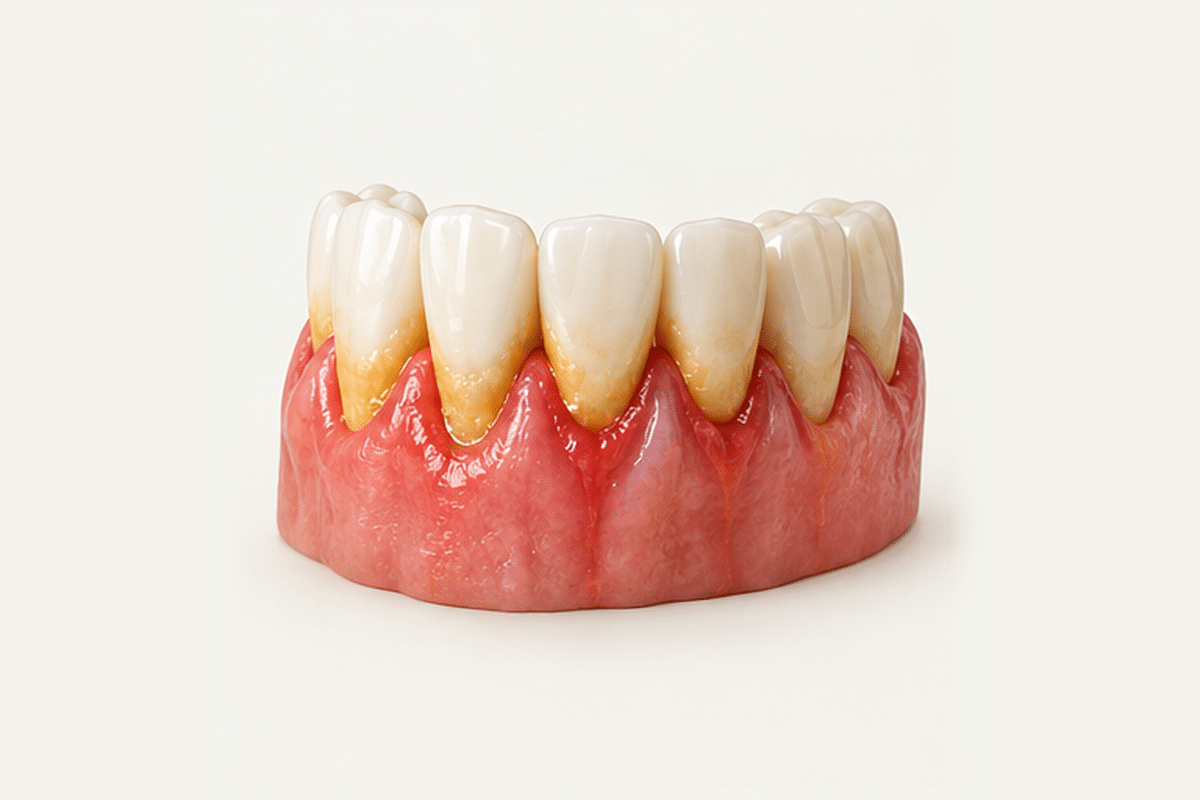
Many people notice a little blood when they brush or floss and assume they’re brushing too hard. Sometimes that’s true, but the most common cause is gum inflammation from plaque – the early stage of gum disease called gingivitis.
The good news is that gingivitis can usually be reversed with a professional clean and better daily care. The key is not to ignore it.
Key takeaways
- Bleeding gums are most often a sign of gingivitis caused by plaque.
- Gingivitis is reversible; untreated, it can progress to periodontitis.
- Keep brushing and cleaning between teeth – stopping makes it worse.
- See a dentist if bleeding lasts more than a week or two.
Common causes of bleeding gums
- Plaque build-up: Bacteria along the gumline irritate the gums.
- Tartar (calculus): Hardened plaque that only a dentist can remove.
- Brushing too hard: A hard brush or heavy pressure can damage gums.
- Starting to floss: Gums may bleed for a few days, then settle.
- Hormonal changes: Pregnancy can make gums more prone to bleeding.
- Medical conditions and medicines: Diabetes and blood thinners can affect gums.
Gingivitis vs periodontitis
| Gingivitis | Periodontitis | |
|---|---|---|
| Gums | Red, swollen, bleed easily | Pull away from teeth, pockets form |
| Bone loss | None | Yes |
| Reversible | Yes | Can be controlled, not reversed |
| Treatment | Clean and home care | Deep cleaning and maintenance |
When to worry
Occasional light bleeding that stops within a few days of better cleaning is common. See a dentist if bleeding continues for more than a week or two, or if you also notice bad breath, receding gums, loose teeth or pus.
Get help quickly if:
Your gums are very swollen and painful, you have a fever, or there is swelling in your face. Our emergency dentist can see you urgently.
How bleeding gums are treated
Dr Mani checks your gums, measures the pockets around your teeth and may take X-rays to check the bone. For gingivitis, a professional scaling and polish removes plaque and tartar, and you’ll get advice on brushing and cleaning between teeth. If periodontitis is found, gum disease treatment may include deep cleaning below the gums and regular maintenance visits.
Daily habits that help
Do
- Brush twice a day with a soft brush
- Clean between teeth daily with floss or interdental brushes
- Use fluoride toothpaste
- Have a professional clean every six months
Don’t
- Stop brushing the bleeding area
- Scrub hard with a stiff brush
- Smoke or chew tobacco
- Wait months for it to go away
Gums and overall health
Gum health is linked to general health. People with diabetes are more prone to gum disease, and treating gum disease can help blood sugar control. If you have bleeding gums, regular check-ups at our dental clinic in Krishna Nagar are an easy way to keep them under control.
Frequently asked questions
Is it normal for gums to bleed when brushing?
Common, but not normal. It usually means the gums are inflamed.
Should I stop brushing if my gums bleed?
No. Keep brushing gently – plaque left behind makes bleeding worse.
Can bleeding gums be cured?
Gingivitis can be reversed with a clean and good home care.
Does mouthwash stop bleeding gums?
It can help, but it doesn’t remove tartar. A professional clean is needed.
Are bleeding gums common in pregnancy?
Yes. Hormonal changes make gums more sensitive. Dental check-ups are safe during pregnancy.
This article is general information and isn’t a substitute for a dental examination. If you have pain, swelling or a dental injury, please contact a dentist.
Previous article Scaling vs Deep Cleaning: Which One Do You Need?